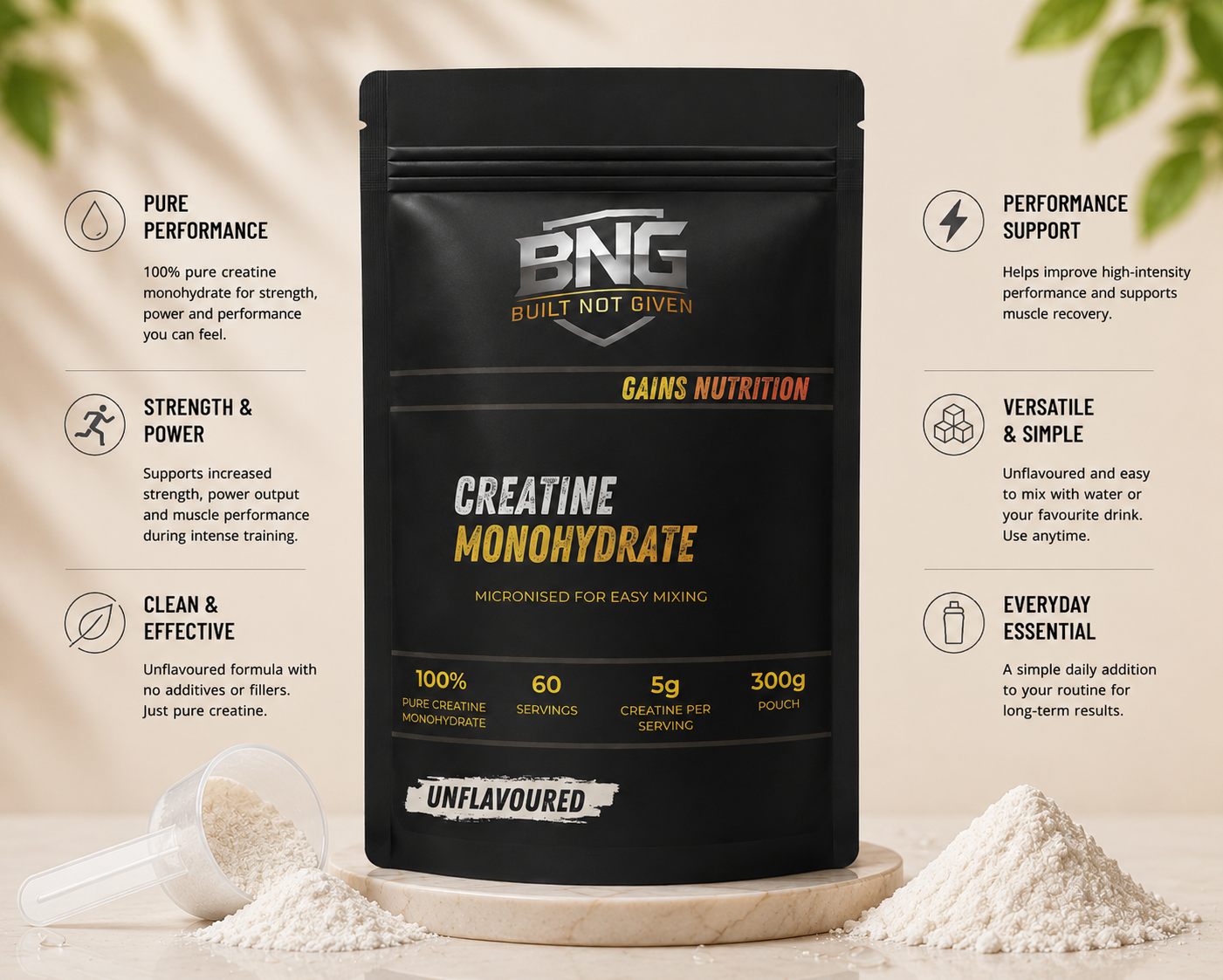
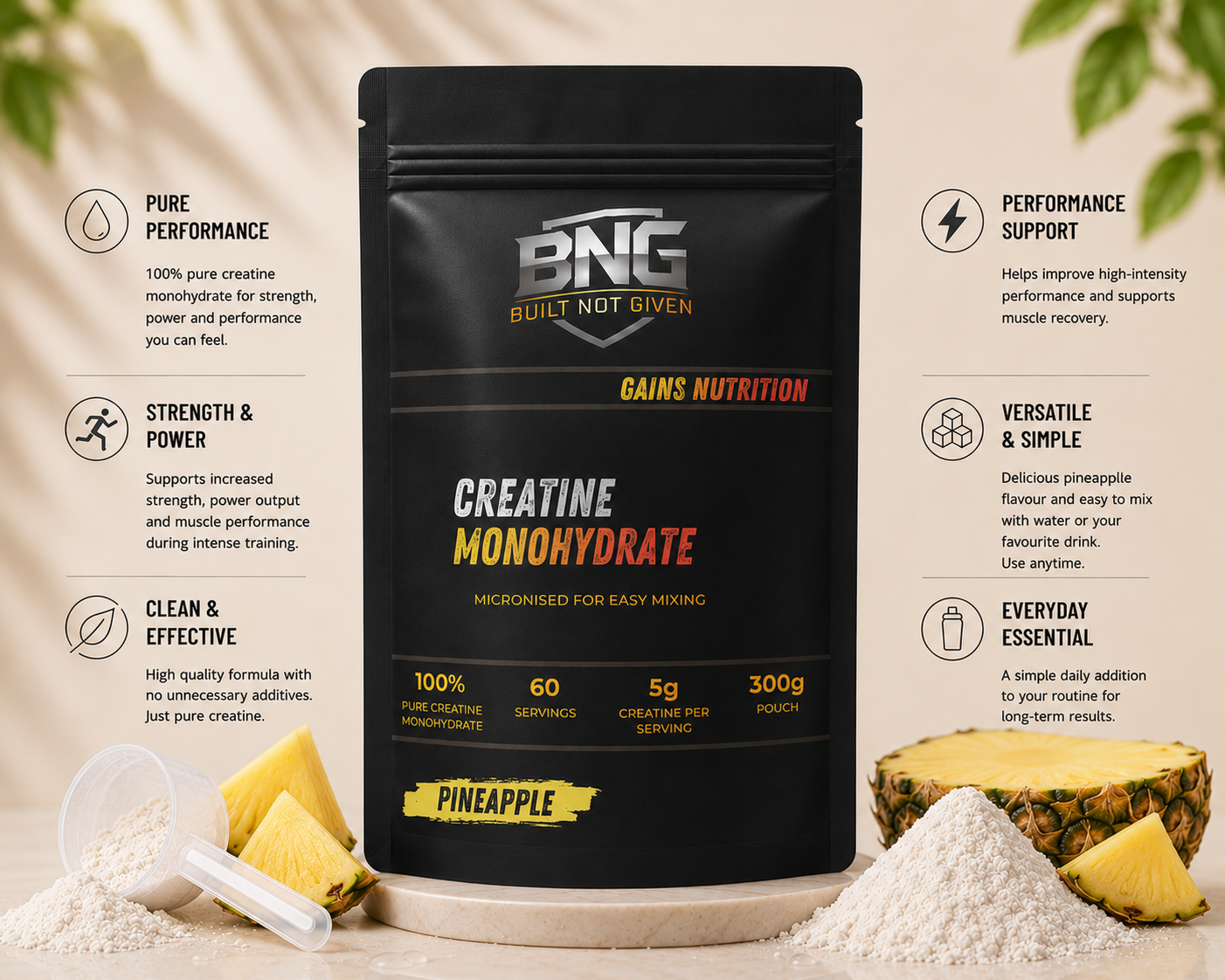
Creatine is one of the most researched and widely used supplements in the fitness industry. Trusted by athletes, bodybuilders, and everyday gym-goers, creatine is known for its ability to improve strength, increase muscle size, and enhance overall workout performance.
Despite its popularity, many people still misunderstand how creatine works and how to use it correctly. In this guide, we explain what creatine is, how it supports your training, and how to take it effectively as part of your supplement routine.
What Is Creatine and How Does It Work?
Creatine is a naturally occurring compound found in small amounts in foods such as red meat and fish. It is also produced by the body and stored primarily in muscle tissue, where it plays a key role in energy production during high-intensity exercise.
During short bursts of activity like weightlifting, sprinting, or explosive movements, your muscles rely on a molecule called ATP (adenosine triphosphate) for energy. Creatine helps regenerate ATP more quickly, allowing your muscles to produce more power during intense exercise.
By increasing the amount of creatine stored in your muscles through supplementation, you can improve strength output, lift heavier weights, and sustain performance during demanding training sessions.
The Main Benefits of Creatine Supplementation
Creatine is one of the few supplements backed by decades of scientific research. Studies consistently show that it can provide several key benefits for people who train regularly.
One of the biggest advantages of creatine is improved strength and power. Many athletes report noticeable increases in lifting performance after supplementing with creatine, especially during compound exercises like squats, deadlifts, and bench presses.
Creatine also supports muscle growth and recovery. By improving training performance and increasing cellular hydration within the muscles, creatine helps create an environment that promotes muscle development over time.
Another important benefit is enhanced workout performance. Because creatine improves energy production during high-intensity exercise, it can help you complete more reps, train harder, and recover faster between sets.
How Much Creatine Should You Take?
The most common and effective form of creatine is creatine monohydrate, which has been extensively studied for both safety and effectiveness.
For most people, a daily dose of 3–5 grams per day is enough to maintain optimal creatine levels in the muscles. Some athletes choose to follow a “loading phase,” taking around 20 grams per day for 5–7 days before reducing to a maintenance dose, but this step is not necessary for everyone.
Creatine can be taken at any time of the day, though many people prefer to take it either before or after training. Consistency is more important than timing, so the key is to take it daily to maintain elevated muscle creatine levels.
It’s also recommended to drink plenty of water while supplementing with creatine, as it increases water retention within the muscles.
Final Thoughts on Creatine
Creatine remains one of the most effective and reliable supplements available for improving strength, power, and muscle growth. With a strong research foundation and decades of use among athletes worldwide, it continues to be a staple in many training programmes.
When combined with a structured workout routine, proper nutrition, and adequate recovery, creatine supplementation can help support long-term performance and muscle development.
If you’re looking to improve your strength, push harder during workouts, and get more from your training, creatine is one of the simplest and most effective supplements you can add to your stack.